Sunday, February 27, 2011

Where to Find Great Black and White Photography Online


Kirkliston Photography, Kirkliston Pond, Pikes Pool by John Gilchrist


Photo Credit: celtics baby clothes


Black and white photography looks great in any décor. You can find just about anything, in any size, to match just about any room. Plus, the neutral tones of black and white photography ensure that it will match just about any color scheme. Here are some of the best places on the web to purchase black and white photography.

AllPoster.com

AllPoster.com is a fantastic site for cheap artwork. Now, cheap doesn't mean poor quality - quite the contrary, in fact. You can find just about anything - traditional paintings, classical art, black and white photography, large posters of bands, musicians, movies and more. They also offer framing.

My Top Pick: "City Street Signs" by Nelson Figueredo - $24.99 (Price doesn't include shipping and handling, or optional framing.)

Why I Chose This Piece: I love New York, more importantly - I love Broadway. Of course, Broadway and West 34th Street is practically the center of the theatre district. It's a great way to bring a little bit of Broadway right into my own home.

The Wall Art Store

This online store has a lot of fantastic, very 'artsy' black and white photos. They offer free shipping and all of the photos come framed, they even offer a few different selections for matting and frames. However, prices can run you from $55 dollars and all the way up to $919. Ouch. However, the quality is very high - so you can be sure you're getting your money's worth.

My Top Pick: "Stonehenge Sunrise" by Matthew De Haven - $50.00 (Price does not include shipping, handling or frame.
Why I Chose This Piece: I love Stonehenge, it's a fascinating place. The fog adds to the mystery of the structure and it's a great piece to add to a global photography collection.

Artful Home

This website offers a lot of wonderful photographs, but the prices run fairly average. The bottom line photographs start at $110 dollars and run up to several thousand dollars - so this isn't the most budget friendly site. However, if you've got the extra cash lying around, it's a great option and chances are you'll spend similar amounts at local art studios, especially if you live in a metropolitan area.

My Top Pick: "Winter Trees I" through Phoenix Galleries - $299.00 (price includes free shipping as well as framing and matting.)

Why I Chose This Piece: This particular photograph would be great for my fiancé's office. He loves the look of trees in the winter, so this is a great piece for him.

AbsoluteArts.com

Absolute Arts caters to the United States, the UK, China and more - and their prices range anywhere from $10 to $1,000,000. With more than 2500 works of art, you'll be sure to find exactly what you're looking for with this website.

My Top Pick: "Merced River Ice" by Ron Gallmeier - $330, Small; $665, Medium; and $1000, Large.
Why I Chose This Piece: Again, this is another piece I know my fiancé would really appreciate. Plus, I love the look of the water, the snow and the trees - so it's something we would both really enjoy in any room of our home.

So whether you've got $10 or $10,000 - you'll be sure to find the ideal pieces of black and white photography to fit your home décor and personal tastes.

Photography Project #1: Recreate Family Photos


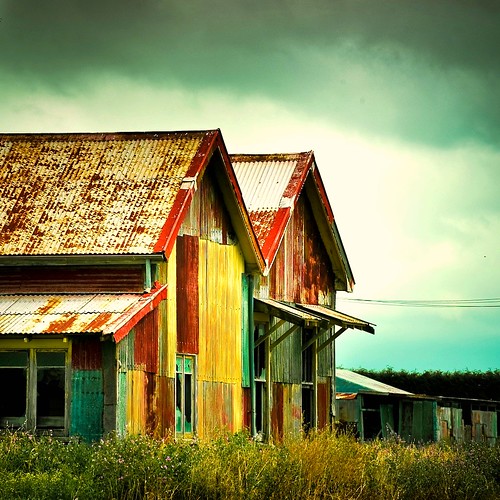
Cuba Gallery: New Zealand / landscape / color / texture / background / buildings / photography by ►CubaGallery


photo source


A fun photography project you can do with your family or friends is to recreate special photographs. Here's how to do it:

Gather old photographs. Take a look through your photo albums to gather the old photo(s) you'll use. Try to go back as far as you can. If you're a teen recreating a moment from your childhood just a few years before, you'll have a large enough contrast. If you're an adult you'll want to go back further to a time when you looked somewhat different than you do now. Pick out a photo that is really memorable to you and others. The photo could have been embarrassing when it was taken, but you laugh about it now. Narrow down your top choices and consider which ones you can realistically recreate.

Grab your family and friends in the original photograph. After you've selected a photograph make sure your photo subjects are on board with recreating the special moment. If someone didn't like their hair in a certain photo now is the time for them to change it a bit. If the photo is a goofy or silly moment you'll want to maintain that same humorous nature.

Dress the part. You don't have to try to recreate the hair and clothing styles of the 90's, 80's, 70's, 60's, but you can wear the same type of clothing. If you're wearing suit in the original photograph, put on another suit. You may also want to similar colors if possible. If a fashion has come back in style similar what you're wearing in the original photograph, that could make for a stylish comparison.

Find the location. Try to go to the same location as the original photograph so both background and setting will be consistent. In some cases there may be a location you can't access. You may not be able to get into your old high school cafeteria. Or maybe you've moved to a different house. Try to find a similar location. If the photo was taken in your old kitchen, take a similar one in your new kitchen.

Study the poses. If you and a couple of friends have distinct poses in the old photo do exactly the same thing. If the photo is more of a close up then focus more on having the same facial expressions.

Place the photos side-by-side. Now that you've taken your recreated photograph take a look at the old and new images. What similarities do you see? What differences? Enjoy your new photo as you've just created new memories.

Saturday, February 26, 2011

Christmas Photography Tips and Advice


Kirkliston Photography, Kirkliston Pond, Pikes Pool by John Gilchrist


credit,photo credit


For Christmas photography tips, or any sort of photography, we want the best results to come from our time and effort. Christmas photography captures special moments, especially when children are involved. In fact, this leads to my first Christmas photography tip:

(1) Focus on the children first. This admittedly is a bias of mine, but Christmas foremost should be a children's holiday. This applies to gift-giving, and also to photography. If you disagree and/or if adults are at the center of your Christmas, fine, that's just my opinion. Just think of ol' Art Linkletter: "Kids Say the Funniest Things." Kids also make the best photo subjects, and regardless, Christmas (like Trix cereal) is for Kids.

Our Top Ten Christmas photography tips are going to relate to the strategy of taking the best photos, not to the type of camera. That's a whole 'nuther topic. In fact, yours truly is not even a shutterbug. My advice comes from working as a local daily newspaper reporter, among some of the best professional photographers, going back to the 1970s when they still used darkrooms, up to today in the digital age. These Christmas photography tips are geared toward how you interact with your subjects, once the camera is chosen and the lighting adjustments are made.

(2) Don't be one of these photographers who is constantly out front and interrupting things, asking people to pose. For your best Christmas photography, be the fly on the wall. Stay in the background and take candid photos of what's happening, photos in which the subjects don't realize you're taking their photos.

(3) A lower angle (shooting "upward" toward the subjects and the scene) often yields better results. Don't hesitate to sprawl on the floor.

(4) In your Christmas photography, look for sequences of events. A photo is just one moment in time and to capture a sequence, many folks nowadays prefer a video camera. Still, there's nothing like a series of photos. For example: (A) Child awaits anxiously for gift-giving to begin. (B) Child receives wrapped gift. ( C ) Child tears wrapping off of gift. (D) Child reacts to gift.

(5) In fact, your sequence of events could begin hours earlier. Child helps decorate tree. Child puts on Christmas outfit. Etc.

(6) Just because you're staying out of the spotlight with your camera, that doesn't mean you can't be persistent. Patience is a virtue in waiting for just the right moment, just the right shot.

(7) Be a minimalist. Don't try to illustrate the whole scene of the Christmas event at once. If it's a party, take turns focusing on individual participants, or no more than two or three in one frame. If your Christmas photography involves a group of carolers, go ahead and photograph the whole group, but also aim for closeups of one caroler, or a small group.

(8) If you still want some posed Christmas photography for the archives, that's fine. Try to do the posing at the conclusion of the shindig, not at the start or during the middle.

(9) For posed photos, try to keep the number of subjects small. Let's imagine the group of Christmas revelers is 20. Go ahead and shoot the group of 20, but keep in mind that with so many folks in there, their faces are going to be the sizes of dimes. Also shoot "subgroups" with three, four, five people.

(10) When people pose in groups, have them put their heads as close together as possible. This may seem like a minor point, but when you see the results, you'll understand. Faces can be 20 percent larger and up close if we eliminate the wasted space between their heads.

SOURCES

Personal experience

http://digital-photography-school.com/16-christmas-photography-tips

http://www.best-family-photography-tips.com/Christmas-pictures.html

http://photography.about.com/od/christmas/Christmas_Photography.htm

Photographer Interview: Break into Concert Photography


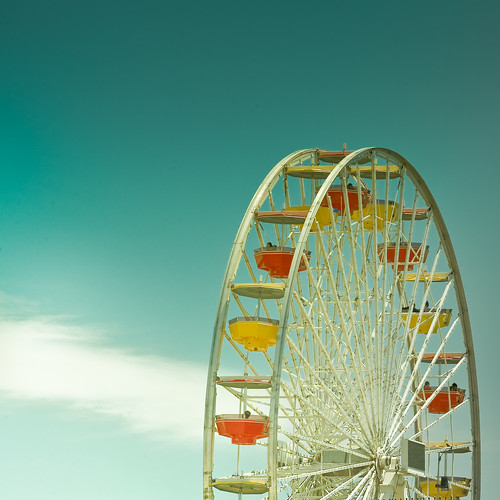
Cuba Gallery: California / Los Angeles / city / Santa Monica / color / blue / circus / ferris wheel / amazing / sky / summer / background / clouds / fun / photography by ►CubaGallery


credit


Anthony Siciliano of Ramsey, NJ, was initially attracted to photography through some playful competition with his friends. Even when he realized his friends had no idea how to use their cameras, he stuck with it and earned recognition in photography and videography.

As a photojournalist and concert photographer his experience is transferring into his newest venture as part of Awesome Farm - a video production and photography business formed with his friends. At least with the friends that know how to use a camera.

Siciliano answered a few questions and gave some advice for fellow photographers looking to break in to photography, specifically concert photography and photojournalism.

What was your first camera?
My first DSLR was a Nikon D80 with the 18-70 mm lens. However, the first point-and-shoot that I bought for myself was a Pentax Optio S-40, which I still have. I really enjoyed taking pictures of flowers, but I was dissatisfied with the performance and results of my point-and-shoot (particularly, the shutter lag). I looked into DSLRs, and ended up purchasing the D80. Thousands of dollars, and much gear later, here I am.

What photographers - well known or unknown - inspire you?
I really have fun with concert photography, live shows where I bring back photos that give you a good sense of what happened during an event. A photographer that does this very well is Todd Owyoung. His website is http://ishootshows.com/. Not only does he get awesome results, but also he shares his wealth of knowledge with everyone, which I respect immensely.

Check out the Strobist blog as well. It features off-camera lighting and lots of DIY equipment at http://strobist.blogspot.com/.

Is there a certain piece of gear you could not live without?
I do not skimp on my gear, and it has definitely paid off. In my opinion, it is better to save up for a longer time and get better equipment, than it is to spend early on something else. Unfortunately, I am addicted to buying new things, which can get very expensive. I could not live without any of this stuff, but if I had to pick one lens, the one that does most of my work is the 18-70mm lens.

Do you have any goals in mind with your photography?
I hope that I will be shooting famous bands very soon. A lot of doing that is getting to know the people who run the events, and the people who manage the bands. So far, the most famous people I have photographed in concert are Kate Voegele, Jack's Mannequin and the rest have been local bands. Currently, I shoot for local newspapers. The pay is not very good, but it is fun and better than nothing at all. Doing this will help me get exposure.

What advice would you give to someone who wants to shoot concerts?
The gear that is best for concert photography, at least in my opinion, is fast lenses and cameras with high ISO abilities. It is deceptively dark inside most music venues. My 50 mm lens does a lot of work there, with its extremely fast 1.8 aperture. My other lenses that go down to aperture 2.8 are extremely important. Large wide-open apertures are important for catching performers in action, without blur. Someone that wants to shoot concerts should definitely invest in a 50 mm lens, and save up to buy other fast lenses. Many places do not allow flash during performances, and your brand-new flash unit will not do any good when security tackles you. Also, watch out for drunken people and mosh pits at shows, which is a good way to wreck your camera.

How did you get a job with your local newspaper? What skills does that require?
When I was doing physical therapy for my tendinitis, I met a photographer who was shooting some photos for a brochure. We got to talking, and she gave me the contact info of a local photo editor. The skill involved in photojournalism is the same most other photographers use, except more irritating. Not only do you have to capture good pictures, but also you have to do it consistently, and make sure you get people's first and last names. If you do not get their names, editors will not use your photos. That can be a big disappointment, after all your hard work. You also have to be versatile and ready for anything. Get to events early and scope things out. that is the best advice I can give. Coming in late and not getting a good spot makes things a lot more difficult.

What advice would you give new photographers?
The best way to learn photography is by doing. When I bought my camera, I barely knew how to use the thing. One great thing I think everyone should do is a Project 365. That is where you take one photo per day (at least) and write a little bit about it on your Flickr account or a photo blog. It will help you learn to shoot in all current situations as well as on days or times where you think a camera might not be convenient to have. Then, at the end of the year, you look back and see how much you have improved, as well as your year in a series of photos. Also, do not forget to take a break when you are post-processing your images. I got a bad case of tendinitis from using the computer too much, and it really puts a kink in your photography.

Where can people see your photography?
Check out my photography on my Flickr site at: http://www.flickr.com/photos/scis/ and soon at www.awesomefarm.com.